
Redesign Your Space: How Floor Plan Remodeling Adapts Your Home to Modern Life
Your home should adapt to how you live, not force you into an outdated lifestyle. Yet millions of homeowners inhabit floor plans designed for a different era, with closed-off kitchens, undersized bedrooms, and choppy layouts that disconnect rather than flow. Interior remodeling, particularly thoughtful floor plan transformation, has become one of the most powerful ways homeowners reclaim their spaces and create homes that genuinely work for modern families. Whether you’re juggling work-from-home schedules, raising growing children, or simply craving more intentional design, reimagining your floor plan can unlock potential you never knew existed.
At Heritage Remodelers & Builders, we’ve spent years helping homeowners transform disconnected, inefficient spaces into homes that inspire joy and support their daily rhythms. A successful interior remodel isn’t just about aesthetics; it’s about understanding how your family moves through space, where light travels, and how rooms can work harder. Our approach combines spatial design expertise with practical solutions, creating environments where form and function dance together. From opening walls to create functional flow, to adding designated zones for work and wellness, we understand that the best remodels respond to who you are right now. Let’s explore how interior floor plan remodeling can revolutionize your home’s livability.
Why Interior Floor Plan Transformation Matters
The Limitations of Static Spaces
Many homes built before the 2000s were designed with compartmentalized rooms and closed-off kitchens. While charming in their way, these layouts create a fragmented experience that contradicts how modern families live. Today’s households need flexibility: a home office that disappears when guests arrive, a kitchen that flows into living spaces for entertaining, and distinct zones that adapt to changing needs.
Interior remodeling addresses this directly. By strategically removing or repositioning walls, adding architectural elements that define without isolating, and reimagining traffic flow, you create a home that functions for how you actually live.
The Statistics: What Homeowners Prioritize
Recent data reveals that homeowners are investing heavily in interior transformation. Kitchens remain the most commonly renovated interior space at 29%, followed closely by bathrooms at 25-27%. But the driving force behind these renovations isn’t just cosmetic: 94% of real estate professionals say thoughtfully designed storage spaces are now the top priority for buyers. This represents a fundamental shift from pure aesthetics to functional, intentional design.
The Evolution: From Open Plans to Hybrid Layouts
The Shift Beyond Pure Open Floor Plans
The open floor plan dominated design for decades, promising spaciousness and connectivity. But smart homeowners have discovered that one enormous, undefined space isn’t always the answer. Today’s trend embraces “the sweet spot”: hybrid layouts that blend openness with architectural distinction.
This means using semi-open designs with strategic elements—sliding glass partitions, slatted wood dividers, pocket doors, or partial walls—that maintain light flow and visual connection while creating defined zones. You get the openness you want without the acoustical nightmare or loss of individual character.
Functional Zoning and Multi-Purpose Spaces
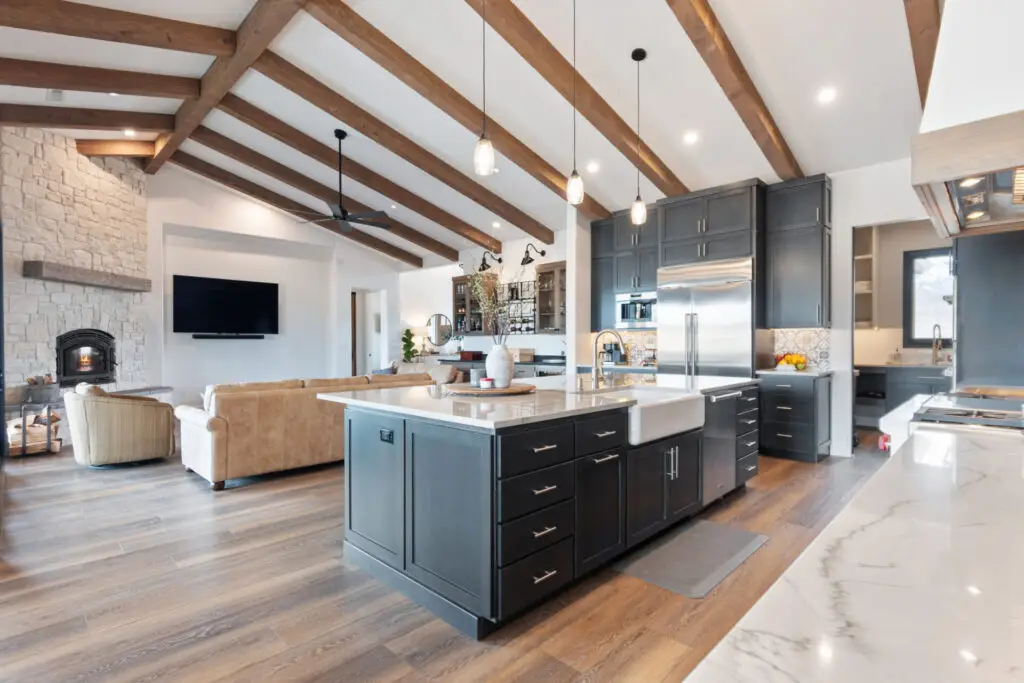
As remote work becomes standard and families need multiple functions under one roof, interior remodeling now prioritizes intentional spaces. A home office integrated into a living area with subtle architectural distinction. A media wall that defines the family room without closing it off. A kitchen island that serves as both cooking station and gathering point. Each space serves a clear purpose while maintaining flow.
The Elements of Successful Interior Remodeling
Strategic Lighting and Natural Materials
Modern interior remodels prioritize natural light and biophilic design—reconnecting homes with nature through large windows, natural materials like wood and stone, and living elements. This isn’t just beautiful; it supports wellbeing and makes spaces feel larger and more inviting. Combined with thoughtful artificial lighting that illuminates work surfaces and creates ambiance, your remodeled space feels energized and purposeful.
Smart Storage and Defined Character
Sixty percent of design experts identify nature integration as the biggest 2025 trend, but equally important is intentional storage and personal character. Built-in desks, media centers, and window seating offer functionality while defining purpose. Each room should have distinct personality—whether through color, materials, or architectural features—creating homes that feel lived-in rather than sterile.
Professional Guidance Makes the Difference
Eighty-four percent of homeowners hire professional help for kitchen remodels, and that statistic extends to full floor plan transformations. Why? Because spatial planning is complex. A contractor with design expertise can optimize flow, anticipate challenges (structural limitations, plumbing constraints), and ensure your remodeled space actually functions as envisioned.
Making Your Remodel Work for You
Start by honestly assessing how your family lives. Do you need better workspace? More gathering areas? Improved natural light? Better acoustics? A thoughtful floor plan transformation addresses these real needs, creating a home that works for you, right now, while adding long-term value.
Ready to transform your living space? Contact Heritage Remodelers & Builders today. Our design consultants specialize in floor plan remodeling that adapts your home to modern living. From open-concept reimagining to hybrid layouts with defined zones, we’ll create a space that reflects how you actually live. Schedule your free consultation and discover how interior remodeling can unlock your home’s true potential.